Blog
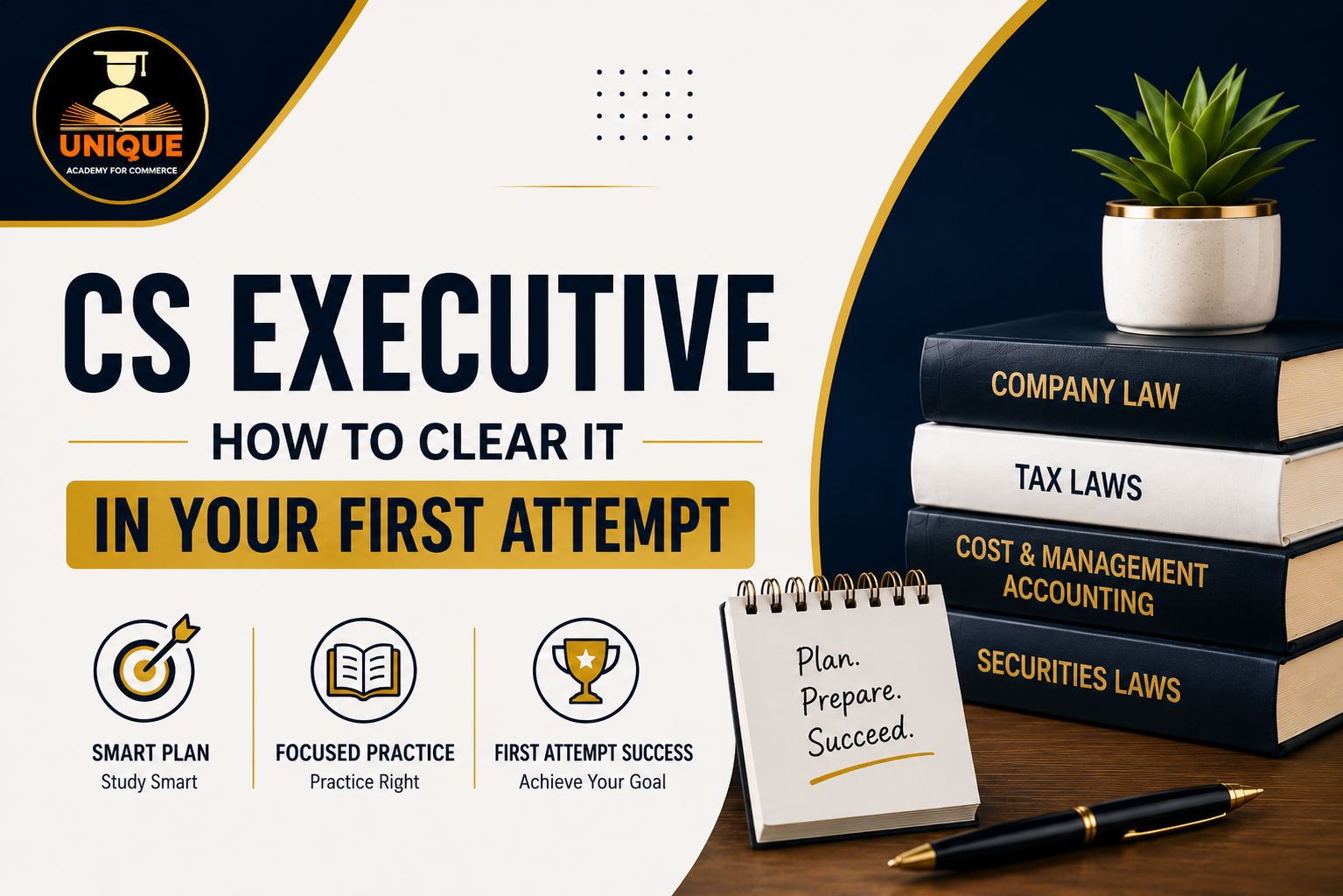
Is CS Executive Tough? How to Clear It in Your First Attempt

Is CS Executive really tough?
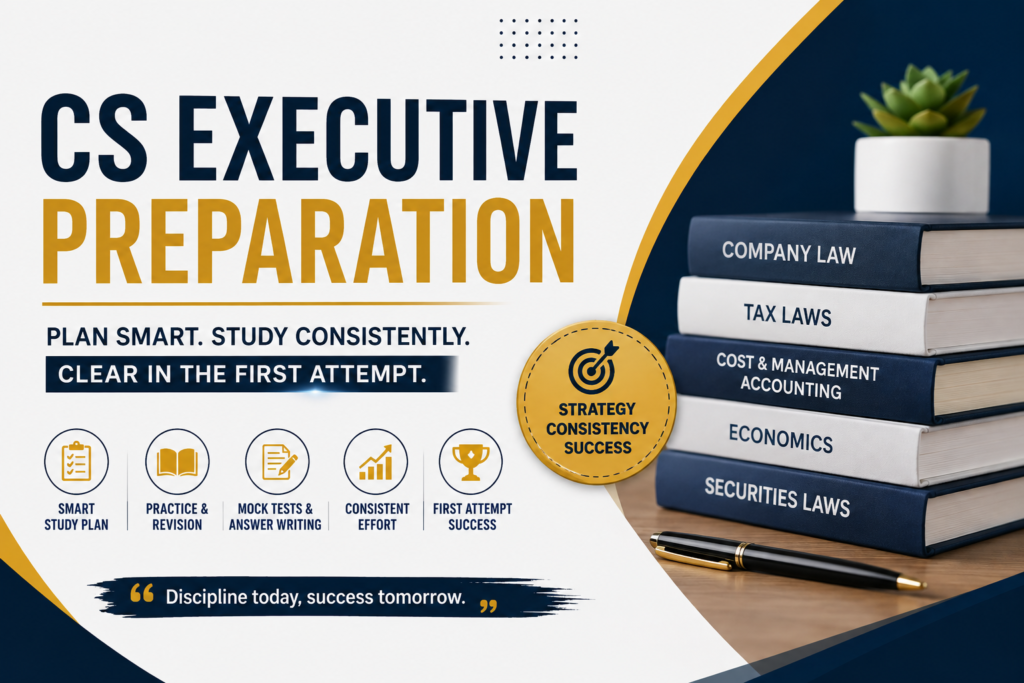
Honestly, it sits in that “moderately tough but very manageable” zone.CS Executive is tougher than most undergraduate exams because of the sheer volume of subjects – company law, tax laws, cost and management accounting, economics, securities laws, and more, split across two groups. What makes it feel hard isn’t that the concepts are impossible; it’s that there’s a lot to cover, the language of the law papers is dense, and many students underestimate how much writing practice they need.
Compare it to something like CA Intermediate, and CS Executive is generally considered slightly less brutal in terms of numericals, but it demands stronger reading comprehension and memory for legal provisions, sections, and case law references.
Why do so many students fail or need multiple attempts?
Mostly for three boring, very avoidable reasons:
- Starting late. Students register for the exam and then start serious preparation only 60–70 days before the exam, which simply isn’t enough given the syllabus size.
- Ignoring practice papers. ICSI’s paper pattern rewards structured, point-wise, application-based answers. Students who only read theory without practicing answer writing tend to lose marks even when they “know” the concept.
- Treating all subjects equally. Some papers like Company Law or Tax Laws are very theory actually flat read theory so they require revision a lot.
- What’s a realistic timeline to prepare? For a full-time student, 4–5 months of focused study is a healthy runway. Working professionals or those juggling college usually need closer to 6 months. The key isn’t total hours, it’s consistency.
What does a first-attempt-friendly study plan actually look like?
• Phase 1 (40% of your time): Make concepts clear Read ICSI study material or a reliable coaching module on each topic once, irrespective of time. Make short notes, not entire textbooks, but just sections, keywords, and mnemonic devices.
• Phase 2 (35% of your time): Practice and revision. Most students lose marks here. Solve previous year’s ICSI question paper, MTPs (Mock Test Paper), and suggested answers. Revisit short notes every week so that no topic comes as a surprise at the time of exam.
• Phase 3 (25% of your time): Revision and Mock Tests. Last one month of preparation should be focused entirely on revision and mock tests. No new readings should be done.
Should you attempt both groups together or split them?
This depends entirely on your bandwidth. If you’re a full-time student with no major distractions, attempting both groups together can save time and often keeps momentum going, since you’re not restarting revision cycles later. If you’re working, studying another course simultaneously, or generally short on daily hours, splitting the groups reduces pressure and often results in better scores per paper. There’s no “correct” answer here — pick based on how much daily study time you can realistically protect, not what your friends are doing.
Are coaching classes necessary, or can you self-study?
Plenty of students clear CS Executive through self-study using ICSI’s own study material, especially for papers with lighter conceptual load. However, for law-heavy or numerically tricky subjects — think Tax Laws or Cost and Management Accounting — a good teacher can save you weeks of confusion by explaining application-based problems clearly. A hybrid approach (self-study for some papers, guided classes for the tougher ones) is what most successful first-attempt candidates actually do.
What are the most common mistakes to avoid?
- Relying only on video lectures without writing practice
- Skipping amendments and recent updates in law and tax papers
- Not attempting enough mock tests under real exam-time pressure
- Leaving case laws and sections for “later” and never getting to them
- Comparing your pace to others instead of tracking your own syllabus completion
Get Details CS Executive Classes Latest Batch
Quick tips that can actually help
- Make a revision-friendly summary sheet for each subject — one page per chapter, maximum.
- Practice writing full answers by hand at least twice a week; exam-day speed comes from muscle memory, not just knowledge.
- Prioritize high-weightage chapters first; don’t treat every topic as equally important.
- Sleep and rest matter more than people admit — burnout kills consistency faster than a tough syllabus does.
Final Word
CS Executive isn’t designed to break you; it’s designed to test whether you can manage a demanding professional syllabus with discipline — which is, honestly, good practice for the CS profession itself. Clear planning, consistent daily effort, and serious mock-test practice matter far more than raw intelligence here. Treat it like a project with milestones, not a mystery to survive, and a first-attempt clear becomes very realistic.
FAQs
No, they differ in terms of numerical and theoretical knowledge. One is not easier than the other as both depend upon how well you prepare.
3-4 hours on an average per day for a period of 4-6 months will be enough for the majority of the students.
I will find some subjects like Accounting and Economics easy because of my background, but other law papers will be new to all.
I will find some subjects like Accounting and Economics easy because of my background, but other law papers will be new to all.
Revision should be done with self-made concise notes, mock test papers, and revision should focus on weaker chapters of the syllabus only.
It depends upon how much time you have left. Many students successfully clear both groups in one shot with proper strategy and planning.